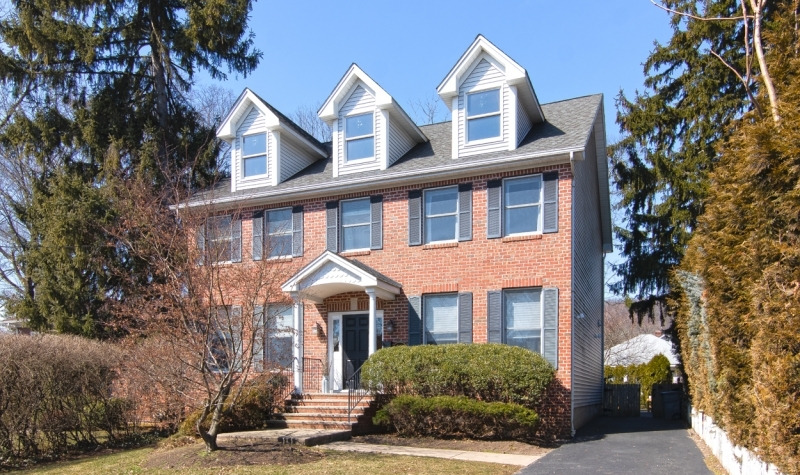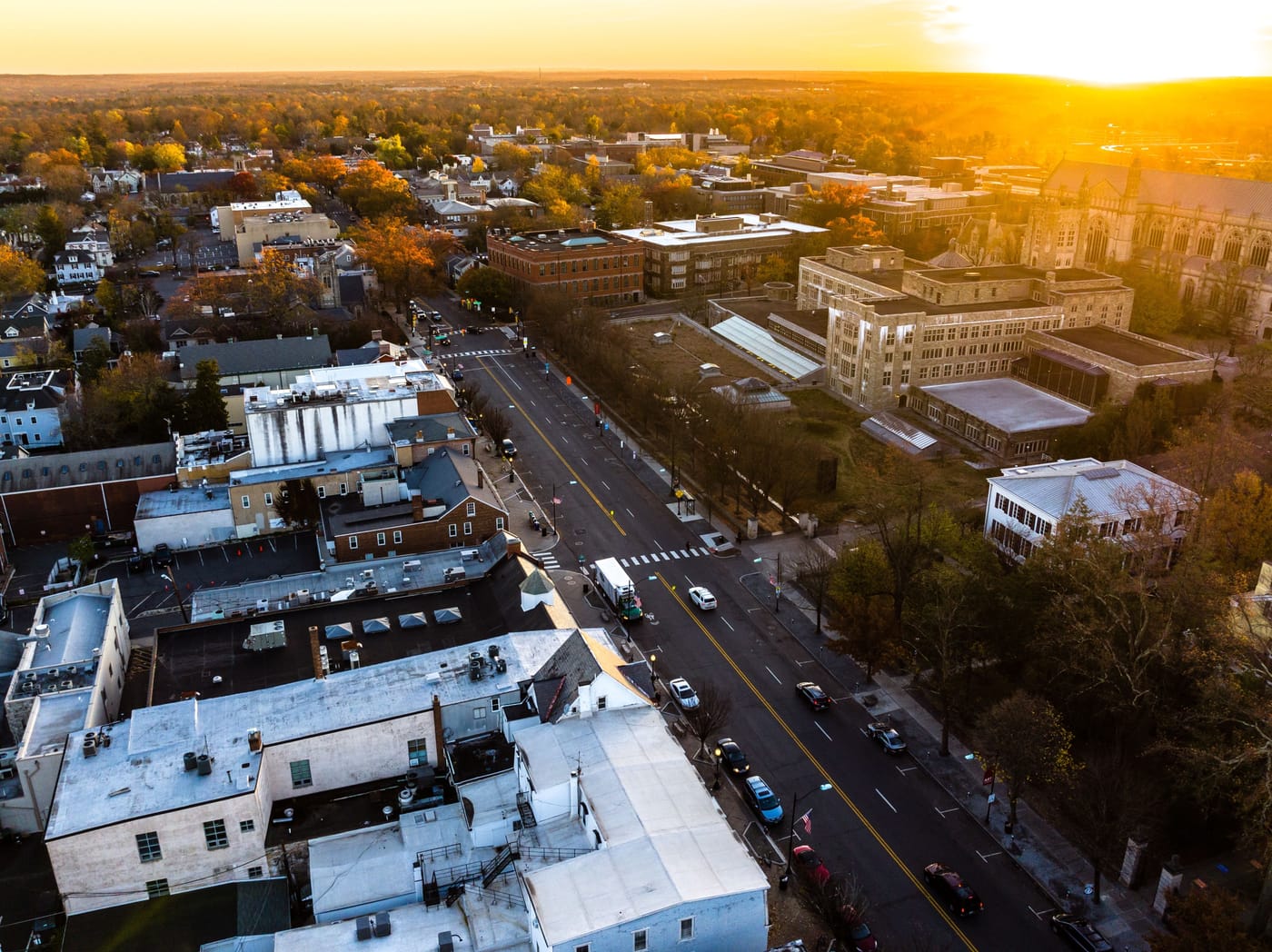
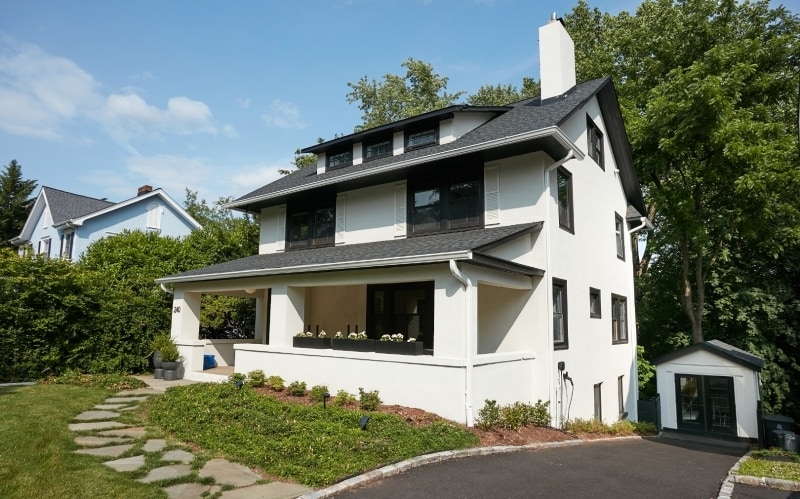
If you're looking at luxury homes Princeton NJ offers, the biggest question isn't simply how much house you can buy. It's whether the property, location, taxes, architecture, privacy, commute, and long-term value make sense for the way you actually live.
For NYC professionals, Princeton and Essex County offer two very different versions of high-end New Jersey living. Princeton combines historic character, larger properties, an established downtown, and access to the Northeast Corridor, while the commuter towns of Essex and Union counties, including Short Hills, Millburn, Montclair, and Summit, offer strong rail connections to New York.
Quick Facts
Princeton: historic homes, estates, and larger properties near an established downtown, in a market where relatively few homes trade each month.
Short Hills: one of the region's highest-priced markets, with Midtown Direct service to New York Penn Station.
Summit: an established downtown and direct rail service, with a competitive high-end market.
Montclair: a wide range of architecture and price points, with an active downtown and its own rail line.
Transit: Princeton's Dinky, a short shuttle train, connects downtown Princeton with Princeton Junction, where NJ TRANSIT Northeast Corridor trains provide service toward New York City. Short Hills, Millburn, and Summit have Midtown Direct trains to New York Penn Station on the Morris & Essex Line, and Montclair is served by the Montclair-Boonton Line.
Median figures for any town cover all home types, not only luxury properties. A true luxury-home analysis compares recent sales of similar high-end properties, because medians can hide major differences in lot size, condition, architecture, and amenities.
What Counts as a Luxury Home in Princeton and Essex County?
Luxury doesn't have one fixed price threshold in New Jersey.
In some parts of Princeton, a high-end property may be a restored historic home on several acres. In Short Hills, it may be a substantial colonial on a deep lot that has been expanded and extensively renovated, with a finished lower level, a pool, and updated systems throughout. In Montclair, luxury can mean architectural character, extensive renovations, views, outdoor entertaining space, or proximity to the town's restaurants and cultural offerings.
That's why price alone isn't enough.
A $2 million home and a $3 million home can offer completely different experiences. One may have a beautifully renovated interior but limited outdoor space. Another may have a larger property but require significant work. A third may command a premium because of its location, architecture, privacy, or scarcity.
For a buyer coming from Manhattan, it's useful to think of luxury as a combination of property quality, location, privacy, convenience, and scarcity rather than simply square footage.
Princeton Luxury Real Estate Has a Different Feel
Princeton tends to appeal to buyers who want more space without giving up a strong town center or access to New York.
The market also has a broad range of housing, which makes headline statistics especially important to interpret carefully.
Princeton's monthly medians swing widely because only a handful of homes trade in any month, so evaluate any figure against the specific period and sample it measures.
A luxury Princeton property shouldn't be valued at the town-wide price per square foot. High-end homes can vary substantially from the market-wide median because of acreage, construction quality, renovations, outbuildings, pools, views, and other features.
Locations Worth Understanding
Princeton is not one uniform luxury market.
Properties closer to the center can offer easier access to Nassau Street, Palmer Square, restaurants, cultural attractions, and Princeton University. Other parts of the municipality provide larger lots and a more private residential setting.
Areas around roads such as Great Road, Herrontown Road, Cherry Valley Road, and Province Line Road can have very different property characteristics. Buyers should evaluate the individual setting rather than assuming that one Princeton neighborhood will behave like another.
A Princeton mailing address also does not always mean a property is in Princeton. ZIP codes with Princeton addresses extend into neighboring townships such as Plainsboro, West Windsor, Montgomery, and South Brunswick, across more than one county, and homes there trade at different price points from Princeton itself. When a listing says Princeton, confirm which municipality the property actually sits in before comparing it against Princeton market data.
For an NYC professional, that distinction can be important. Someone who wants restaurants and the town center a short distance from home may prioritize a different property from someone who wants a large lot, home office, pool, and maximum privacy.
Luxury Markets Across Essex and Union Counties
The high-end market north of Princeton isn't concentrated in one town. Short Hills, Millburn, and Montclair sit in Essex County, while Summit is just across the county line in Union County.
Short Hills and Millburn
Short Hills is one of the clearest luxury markets in the region, particularly for buyers who want substantial homes combined with a commuter-friendly location.
Buyers shouldn't assume that a luxury listing will sit simply because it's expensive. Well-priced homes can still draw competing offers.
Millburn and Short Hills also carry meaningful property-tax considerations, with tax bills among the highest in the state.
For a high-end buyer, that makes taxes part of the purchase decision rather than an afterthought.
Summit
Summit, in Union County, provides another strong option for NYC professionals who want an established downtown and rail access.
Summit's high-end market is competitive, and prices reflect its downtown and direct rail service.
For buyers seeking a high-end property in Summit, preparation matters. A desirable home can attract attention quickly, so understanding comparable sales before making an offer is especially important.
Montclair
Montclair offers a different version of luxury.
Rather than focusing exclusively on large newer estates, the market includes architecturally distinctive homes, renovated historic properties, substantial residences, and properties close to restaurants, shops, parks, and cultural destinations.
Montclair's market is competitive, and well-priced homes can draw multiple offers.
The town's property-tax burden is also worth examining. New Jersey towns assess property at different fractions of market value, so compare actual tax bills rather than assessments.
Taxes Can Change the Real Cost of a Luxury Home
A common mistake among high-end buyers is focusing heavily on purchase price while treating annual carrying costs as secondary.
In New Jersey, property taxes can materially affect the cost of ownership.
In Princeton, as in most New Jersey towns, the school portion makes up a large share of the total tax bill, with county and municipal portions making up the remainder.
A luxury property's assessment can differ substantially from a typical home's, so confirm the actual tax bill for any property you're considering.
Before making an offer, ask for the current tax bill and determine whether there have been recent reassessments, renovations, additions, or other changes that could affect future taxes.
The same principle applies to Essex County. Don't compare two homes solely by purchase price. Compare their expected annual taxes, insurance, maintenance, utilities, landscaping, pool care, and any association fees.
What NYC Buyers Should Know About the Commute
For many NYC professionals, the commute can make or break a purchase.
Princeton has an especially useful rail setup. The Princeton Branch, commonly known as the Dinky, is a 2.7-mile electrified line connecting Princeton with Princeton Junction, where the main NJ TRANSIT Northeast Corridor station is located. Princeton Junction itself sits in neighboring West Windsor Township. NJ TRANSIT says the Dinky is timed to connect with Northeast Corridor trains, providing access toward New York, Newark, and Trenton.
That doesn't mean every Princeton property offers the same door-to-door commute. A home farther from the station may require driving, rideshare, or parking before the train portion begins.
The established commuter towns in Essex and Union counties have a rail advantage of their own. Short Hills, Millburn, and Summit are served by the Morris & Essex Line, with Midtown Direct trains to New York Penn Station, and Montclair's stations are on the Montclair-Boonton Line. These rides into Manhattan are generally shorter than the trip from Princeton Junction.
For a buyer who works in Manhattan several days a week, it's worth testing the actual commute from the property rather than relying on a general town-level estimate.
Luxury Home Features That Deserve Extra Attention
At the high end, you're often buying more than bedrooms and bathrooms. You're buying systems, construction quality, land, and the cost of maintaining all of them.
Construction and Renovation Quality
A recently renovated home isn't necessarily the same as a well-built home.
Look closely at the age of the roof, HVAC systems, electrical service, plumbing, windows, foundation, drainage, and major appliances. If the property has undergone extensive renovation, ask for permits and documentation where appropriate.
Historic properties deserve additional attention because charm can come with specialized maintenance requirements.
Outdoor Space
A large yard can be one of the biggest advantages of moving from Manhattan to New Jersey, but it also creates ongoing costs.
For properties with pools, outdoor kitchens, extensive landscaping, irrigation, retaining walls, generators, or detached structures, buyers should understand both condition and annual maintenance.
Home Offices and Technology
For NYC professionals with hybrid schedules, a dedicated office can be more valuable than an extra formal room.
Luxury properties may also include whole-house networking, security systems, backup generators, integrated audio, smart lighting, climate controls, and other technology. Buyers should determine whether these systems are current, serviceable, and transferable.
Schools, Zoning, and Property Records Still Matter
Even when education isn't the primary reason for a purchase, school information can be an important part of property due diligence for many buyers.
Princeton buyers should review current information directly from the Princeton Public Schools district rather than relying on listing descriptions or third-party rankings.
The same approach applies in Essex County. School assignments, programs, boundaries, and district information can change, so buyers should verify current details directly with the relevant district.
Zoning is another area that deserves attention.
If you're buying a large property because you want to add a pool house, expand the residence, create an accessory structure, or make other improvements, don't assume the lot automatically allows the project. Local zoning, setback requirements, historic restrictions, wetlands, easements, and conservation considerations can all affect what is possible.
HOA and Condo Fees Need a Closer Look
Not every luxury property is a standalone estate.
Princeton and Essex County also have upscale condominiums, townhomes, and planned communities. These can be attractive for buyers who want high-end finishes without the maintenance of a large property.
But monthly association fees can vary significantly, and buyers should review exactly what they cover.
For a specific property, verify the current HOA or association fee, reserve funding, recent assessments, insurance responsibilities, maintenance obligations, pet rules, rental restrictions, and any planned capital projects.
How to Evaluate a Luxury Property Before Making an Offer
The best luxury purchase isn't necessarily the most impressive house you see.
Start by defining what matters most. Is it a short commute? An active downtown close by? Privacy? Land? Architectural character? New construction? A pool? A home office? Proximity to cultural and dining options?
Then compare properties on the same basis.
Look at recent sales with similar square footage, lot size, age, condition, location, and amenities. A $2.5 million home with a finished basement and pool shouldn't automatically be compared with a $2.5 million home on twice the land that needs significant renovation.
This is where local market knowledge becomes especially useful. At the luxury level, the number of truly comparable sales can be small, and one unusual transaction can distort a simple price-per-square-foot calculation.
It's also worth remembering that market statistics don't tell the whole story. A town-wide median establishes context, but it can't tell you what a particular estate should be worth, and in Princeton it can shift substantially from one month to the next given how few homes trade there.
Luxury Homes Princeton NJ Buyers Should Compare Carefully
For buyers specifically searching for luxury homes Princeton NJ offers, the strongest strategy is to compare the property with other genuinely comparable high-end homes rather than relying on broad market averages.
Princeton can offer more land, historic homes, mature neighborhoods, and a distinctive town-center lifestyle. Essex County, meanwhile, gives NYC professionals access to several established communities, each with its own housing stock, commute pattern, downtown, and price range.
The right choice often comes down to lifestyle as much as real estate.
A buyer who values Princeton's academic and cultural environment, larger properties, and Dinky connection may have a very different shortlist from someone who prioritizes a commuter-town setting in Short Hills, Summit, or another established community in Essex or Union County.
Frequently Asked Questions
What price range is considered luxury in Princeton NJ?
There isn't a single official luxury price threshold for Princeton. In practice, high-end properties often stand apart because of their location, acreage, architecture, construction quality, privacy, or amenities rather than price alone. Princeton's overall median sale price includes all home types and comes from a market that trades only a handful of homes each month, so it shouldn't be treated as a luxury benchmark.
Is Princeton or Short Hills better for an NYC professional?
Neither is universally better because the choice depends on the buyer's priorities. Princeton offers a distinctive downtown, larger properties, and the Dinky connection to Princeton Junction and the Northeast Corridor, while Short Hills offers a highly competitive luxury market and a shorter train commute into Manhattan. The best comparison should include the specific home's location, commute, taxes, maintenance costs, and lifestyle fit.
Are property taxes high on luxury homes in New Jersey?
Property taxes can be a significant carrying cost for luxury homeowners in New Jersey, and the actual amount depends on the property's assessment and local tax structure. A buyer should review the actual tax bill for the property being considered.
How quickly are high-end homes selling in Essex County?
Well-priced homes in several Essex County markets tend to move quickly, although luxury properties can behave differently from the broader market. Not every luxury listing sells quickly, so buyers should evaluate recent comparable sales and current competition before making an offer.
What should I inspect before buying a luxury home?
A luxury-home inspection should cover the normal structural, environmental, and mechanical systems plus property-specific features such as pools, generators, extensive landscaping, retaining walls, smart-home systems, outbuildings, large roofs, drainage systems, and specialty equipment. Buyers should also review permits, zoning, property records, tax information, association documents where applicable, and any known environmental or land-use restrictions before completing the purchase.
Find the Right High-End Property in New Jersey
Buying at the luxury level requires a closer look at the details that don't always appear in a listing, from comparable sales and taxes to construction quality, land, commute, and long-term maintenance.
For NYC professionals comparing or considering Princeton and Essex County, Lisa Danbrot Properties can help put individual properties into their local market context. You can learn more through Lisa Danbrot Properties and explore which New Jersey communities best fit your priorities.